Showing posts with label urban decay. Show all posts

Palace Theater: An Eerily Beautiful Abandoned Relic of Gary, Indiana

The Palace Theater, once a grand venue for motion pictures, vaudeville acts and stage plays, fell victim to Gary, Indiana's tragic decline. The ornate playhouse now stands abandoned and ravaged by scrappers and the elements.

Palace Theater Abandoned in Gary, Indiana

After exploring the ruins of Gary Public Schools Memorial Auditorium, I had one more stop before I'd leave Gary and continue east: The Palace Theater.

At the time of my visit there were no fences or No Trespassing signs. The entrances to the theater and backstage area stood wide open.

The interior was cavernous and pitch dark except for a little bit of daylight spilling in through the doorways and a hole in the roof. Still I was able to capture a few decent long exposure shots.

A piano remained in the orchestra pit, dusty and weathered.

Palace Theater Abandoned in Gary, Indiana

A tattered backdrop hung over the stage, a faded image of Morocco, left from the final production before the Palace Theater closed for good.

Palace Theater Abandoned in Gary, Indiana

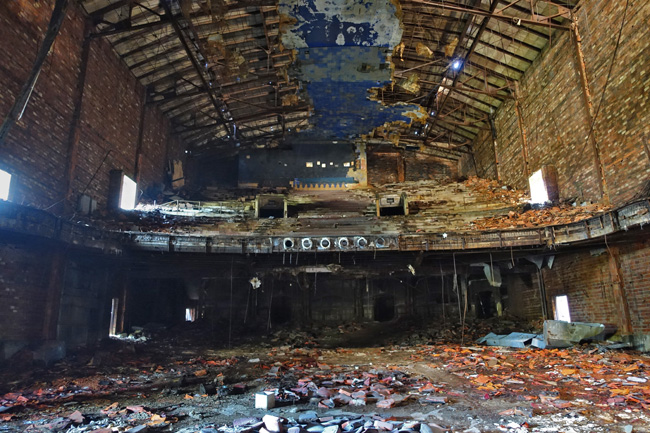
The audience seating had been destroyed over the years and lay in decaying chunks across the floor and balcony.
Palace Theater Abandoned in Gary, Indiana

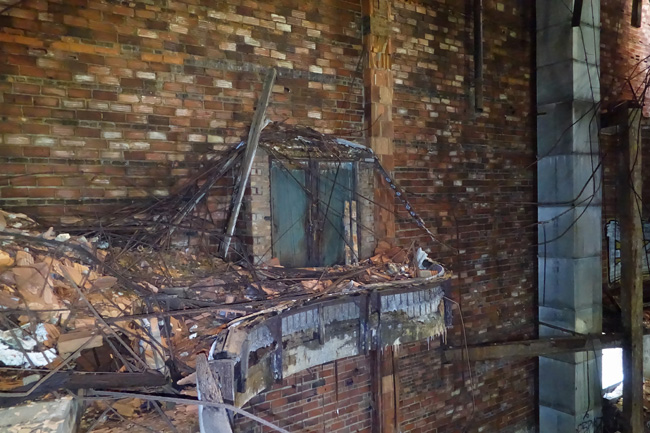
The balcony level has become unstable after decades of decay and the railings are gone, making it a hazardous place to venture in the dark.

Palace Theater Abandoned in Gary, Indiana

Palace Theater Abandoned in Gary, Indiana

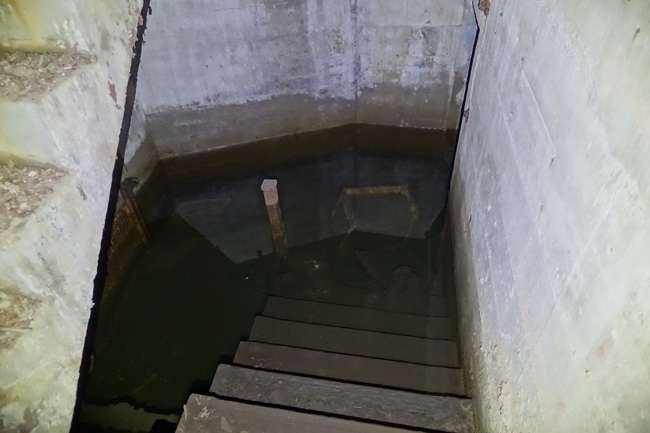
Toward the back of the building a set of stairs led down to a basement submerged in standing water.
Palace Theater Abandoned in Gary, Indiana

I climbed the staircase to the upper floor and was surprised to find that it housed apartments.

Palace Theater Abandoned in Gary, Indiana

Palace Theater Abandoned in Gary, Indiana

Palace Theater Abandoned in Gary, Indiana

Time has not been kind to them.

Palace Theater Abandoned in Gary, Indiana

Palace Theater Abandoned in Gary, Indiana

Most of the units were rather small and several used Murphy beds as a space saving technique.

Palace Theater Abandoned in Gary, Indiana

Mineral deposits hang from the ceiling of the upper level in tiny stalactites from years of flooding.

Palace Theater Abandoned in Gary, Indiana

The Palace Theater was designed by architect John Eberson and built in 1925 in Gary, Indiana's Emerson neighborhood. It seated an audience of 3000 and featured live stage shows, vaudeville acts, and motion pictures.

John Eberson was famous for creating atmospheric theaters, which became popular in the 1920s. Atmospheric theaters were designed to resemble European courtyards or gardens and to make the audience feel like they were immersed in the scene rather than observing it from afar.

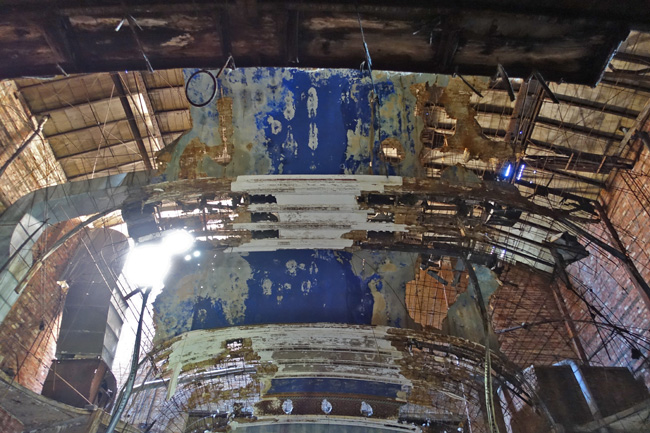
The curved ceiling of the movie palace was painted the dark blue of an evening sky and projectors cast wispy clouds onto it.
Palace Theater Abandoned in Gary, Indiana

Low-voltage chandeliers were meant to mimic starlight. Alcoves along the walls contained stuffed birds and statues that one might find in a Spanish courtyard.
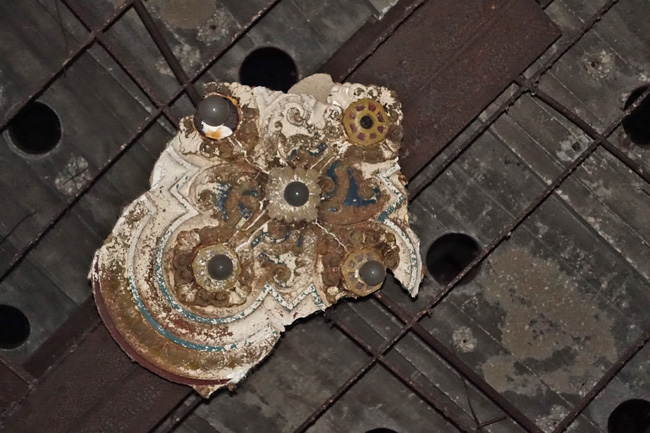
Palace Theater Abandoned in Gary, Indiana

After US Steel drastically decreased its workforce in the '60s, the city of Gary, Indiana experienced severe economic decline and increased crime. Attacks and muggings became common in the area.

In 1968, Aldrid Black, a high school sophomore was stabbed to death in the lobby of the Palace Theater. The venue quickly developed a reputation as a place of violence and drug dealing. It finally closed in 1972 after a young woman was attacked in the restroom.
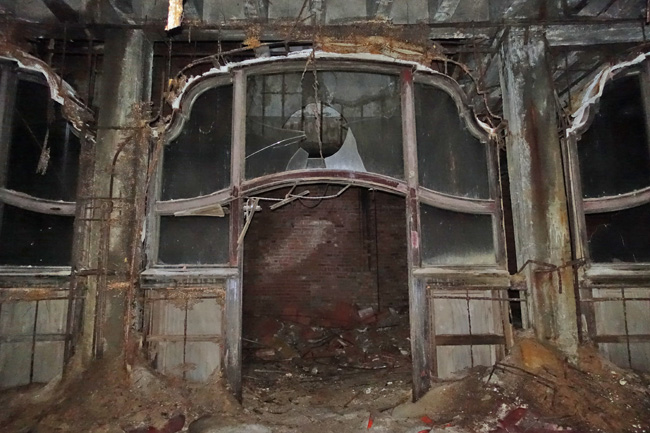
Palace Theater Abandoned in Gary, Indiana

Several short-lived attempts to reopen the theater occurred in 1975 and 1976, but both failed due to financial difficulties.
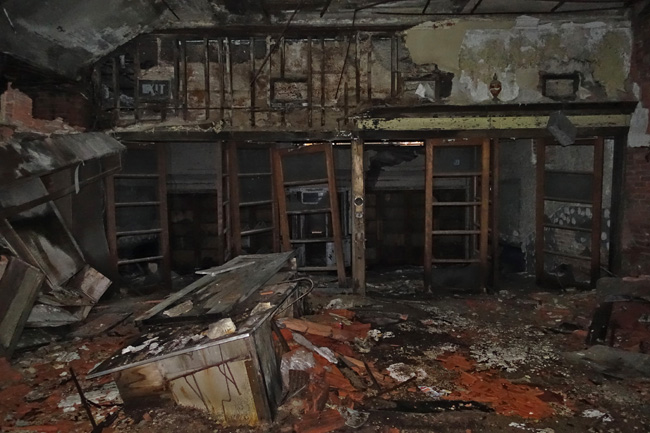
Palace Theater Abandoned in Gary, Indiana

In 1987 a group of investors planned to renovate the Palace Theater and neighboring storefronts at a cost of $500,000, but the plan never came to fruition.
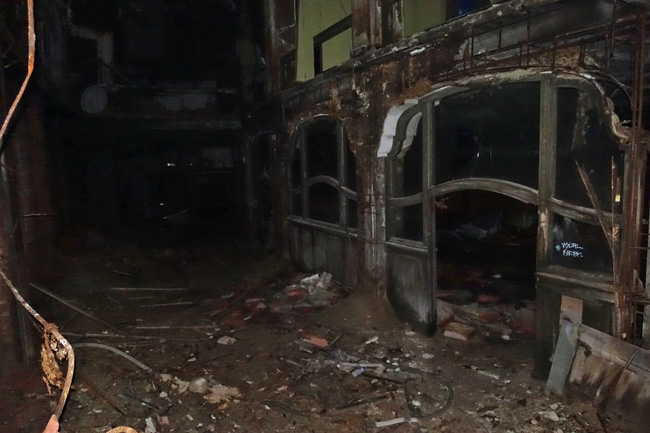
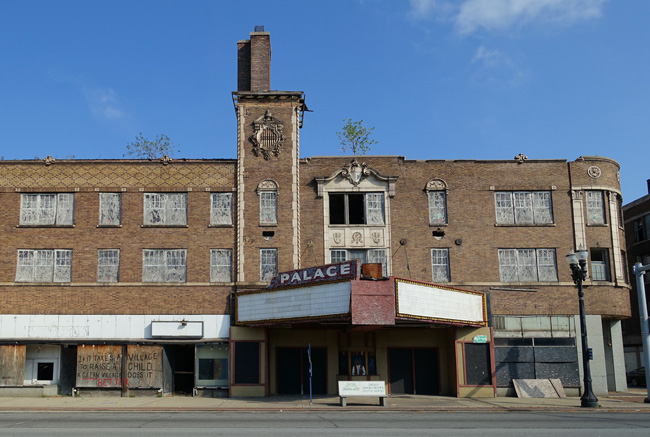
Palace Theater Abandoned in Gary, Indiana

In 2002, when the Miss USA pageant was held in Gary, the theater's front windows were covered in plywood painted to create the illusion that it was still operational. The marquee out front announced "Jackson Five Tonite". The lettering remained for many years until it was gradually brought down by the wind. If you look closely at the marquee, you can still see the faint silhouettes of the letters against the white background.
 
Palace Theater Abandoned in Gary, Indiana

It is sad to see the once-exquisite movie palace in such an advanced state of decay and it seems unlikely that it will be renovated and reopened anytime soon. It would take a lot of work and funding to breathe new life into Palace Theater, and given the city's continuing decline, it would be a risky investment.

Palace Theater Abandoned in Gary, Indiana

After exploring the Palace Theater, I said goodbye to Gary, Indiana and made my way to the sprawling ruins of Kingsbury Ordnance Plant, a World War II-era ammunition factory. I can't wait to tell you all about it in my next article. To receive an email announcement, please subscribe to Places That Were.

Thank you for visiting. If you enjoyed this article, please share it on Facebook.

Until next time, check out my previous posts about the incredible places I explored on my Epic Rust Belt Road Trip.

And feel free to follow me on social media:

Facebook: http://www.facebook.com/placesthatwere

Instagram: http://instagram.com/theplacesthatwere

Twitter: https://twitter.com/placesthatwere/

Tumblr: http://placesthatwere.tumblr.com/

Google+: https://plus.google.com/u/0/+JimSullivanPlacesThatWere/posts

EyeEm: https://www.eyeem.com/u/placesthatwere

Youtube: https://www.youtube.com/jimplicit

500px: https://500px.com/placesthatwere

Thank you!


The Ruins of a Gothic Masterpiece: Abandoned City Methodist Church of Gary, Indiana

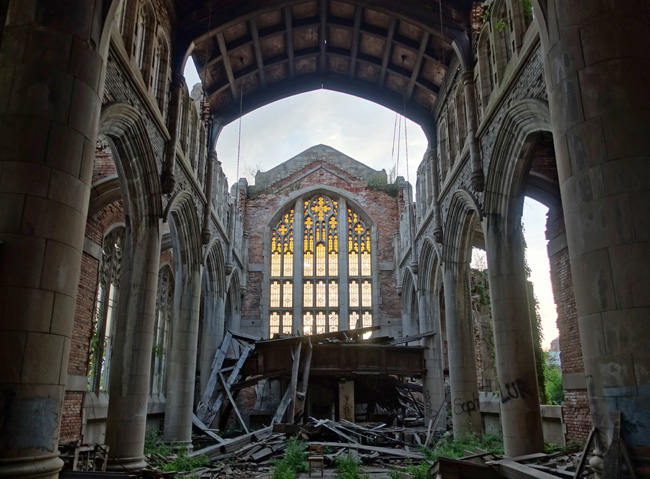
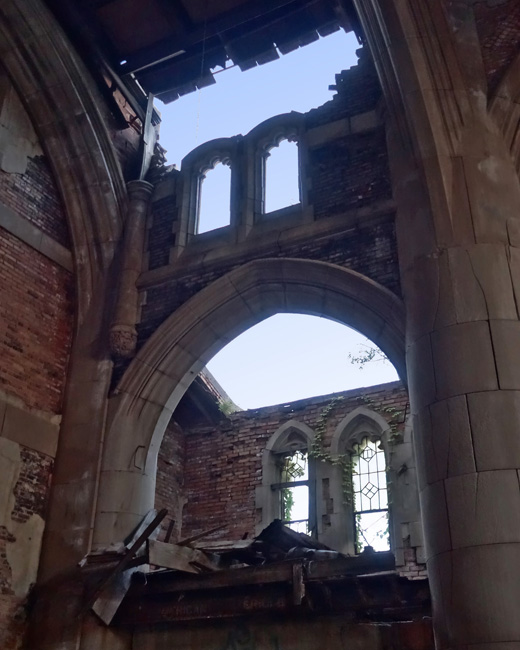
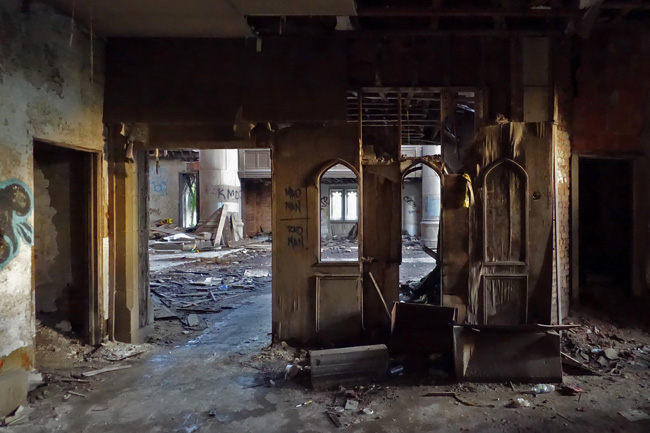
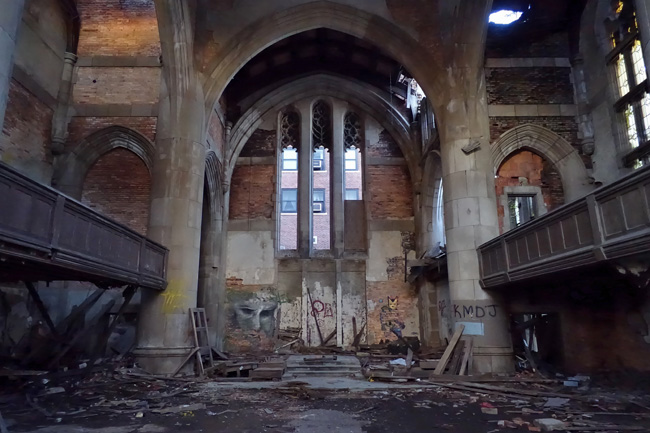
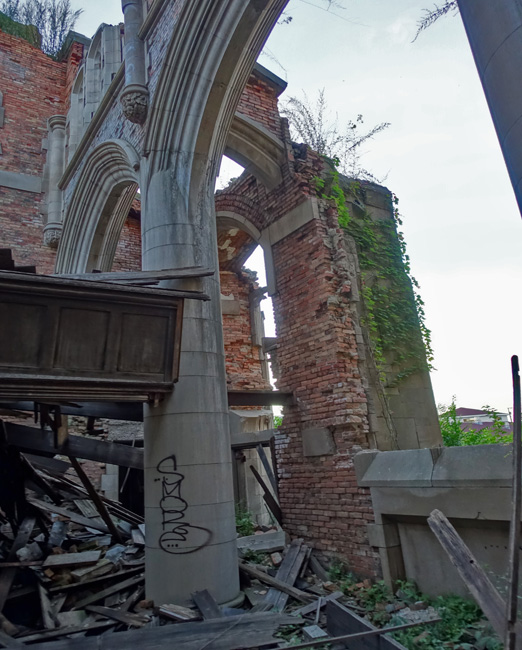
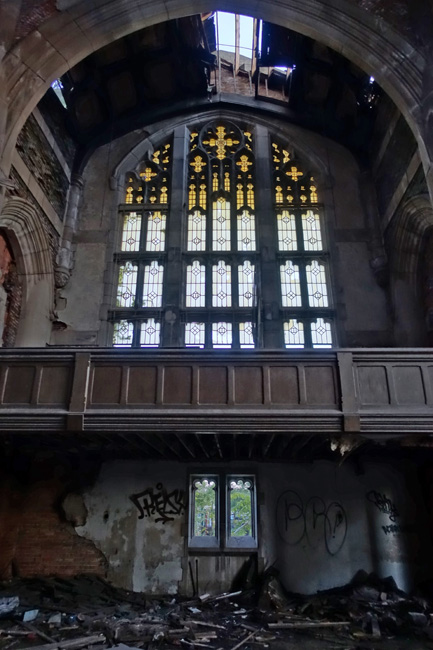
City Methodist Church of Gary, Indiana is arguably the most beautiful example of urban decay in the Rust Belt. The Gothic Revival structure, which stands in ruins after decades of neglect, arson and vandalism, is stunning to behold.

City Methodist Church Abandoned Gothic Ruins in Gary Indiana

After exploring an abandoned power plant in the Chicago suburb of Dixmoor, IL, I continued east to Gary, Indiana. I knew it was the epitome of a Rust Belt city: a declining population, job losses, a reputation for high crime. But nothing could have prepared me for what I'd find there.

City Methodist Church Abandoned Gothic Ruins in Gary Indiana

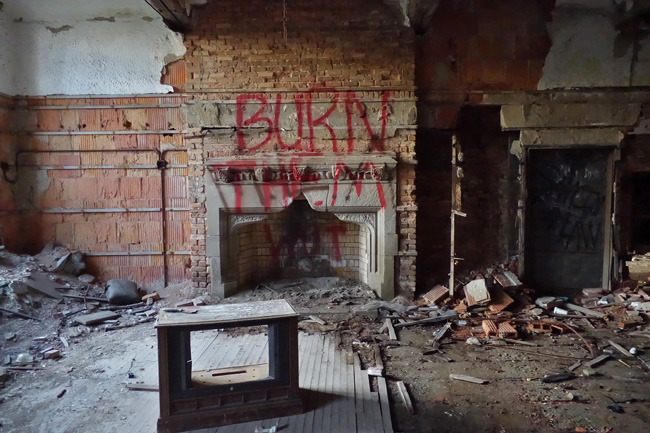
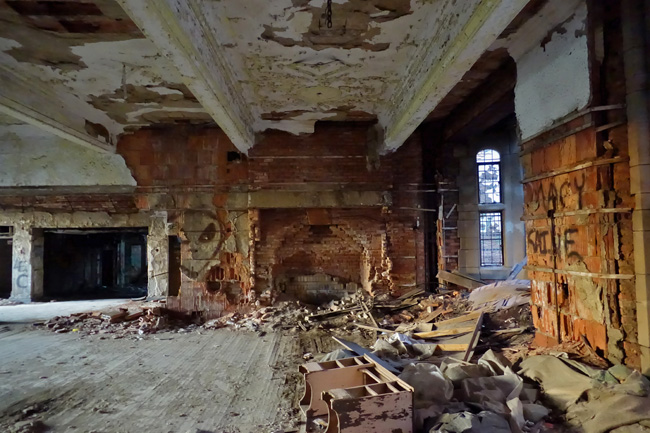
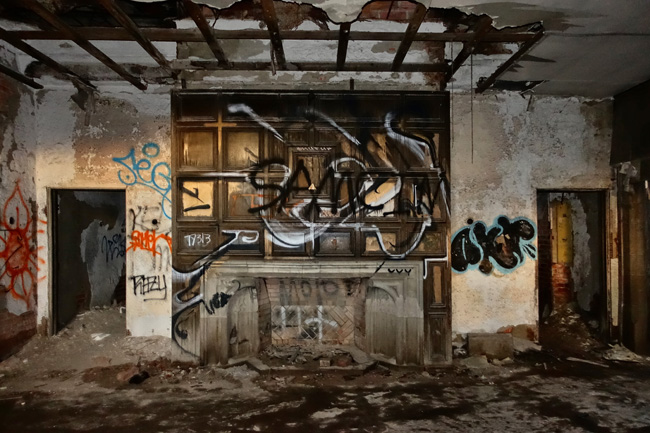
Driving into Gary, Indiana is a strange, unsettling experience. A third of the buildings there are abandoned. What were once homes and businesses are now vacant, crumbling structures, their walls tagged with graffiti and overtaken by creeping ivy and weeds. Windows are boarded up or shattered and gaping.

As someone who is fascinated by abandoned places, I was excited to explore the history of this city, but my enthusiasm was overshadowed by an unexpected and profound despair. It is hard to witness such desolation without feeling a sense of hopelessness.

City Methodist Church Abandoned Gothic Ruins in Gary Indiana

The daylight was fading fast, but I was determined to explore at least one site before nightfall.


When I pulled up to the ruins of City Methodist Church, a few kids were hanging out in front of the school across the street. On the next block over stood a row of modern homes. It was strange to see the overgrown, collapsing ruins of the old church alongside a well-kept residential neighborhood. It is a common pattern throughout the City of Gary.

City Methodist Church Abandoned Gothic Ruins in Gary Indiana

Gary, Indiana was founded in 1906 by the United States Steel Corporation as the home for its new Gary Works plant. In its early years, the population was fairly diverse; nearly a third of its residents were immigrants from Eastern Europe.

The city was named after Elbert Henry Gary, a lawyer and the founding chairman of the United States Steel Corporation. Gary Works, once the world's largest steel mill, is still the largest integrated mill in North America and the city's largest employer. 

City Methodist Church Abandoned Gothic Ruins in Gary Indiana

In 1919 Gary was the site of a major steel strike. Rioting became such a problem that the Governor of Indiana declared martial law and over 4000 federal troops were brought in to restore order. 

Gary is also famous for being the birthplace of The Jackson 5.

City Methodist Church Abandoned Gothic Ruins in Gary Indiana

As is the case with many Rust Belt cities, Gary, Indiana began to suffer from increased competition from the steel industry overseas during the 1970s. The city fell into a downward spiral of job loss, falling tax revenue, increased crime, and a shrinking population. It has still not recovered. 

City Methodist Church Abandoned Gothic Ruins in Gary Indiana

Gary Works and its associated facilities employed over 30,000 people in the early 1970s, but by 1990 that number had fallen to only 6,000. 

City Methodist Church Abandoned Gothic Ruins in Gary Indiana

At the time of the 2010 census, the population was 80,294, a 55 percent decrease from its peak of 178,320 in 1960.

City Methodist Church Abandoned Gothic Ruins in Gary Indiana

As of 2013, the Gary Department of Redevelopment has estimated that one-third of all homes in the city are unoccupied or abandoned.

City Methodist Church is one of Gary's most recognizable landmarks. Standing abandoned since 1975, it has become a symbol of the city's decline.

City Methodist Church Abandoned Gothic Ruins in Gary Indiana

Hauntingly beautiful, the old church has been featured in many movies, including the 2009 remake of "Nightmare on Elm Street" and "Transformers 3."

City Methodist Church Abandoned Gothic Ruins in Gary Indiana

City Methodist Church Abandoned Gothic Ruins in Gary Indiana

Construction of City Methodist Church began in 1925 at a cost of $650,000 (equivalent to over $8.8 million in 2016 dollars). The U. S. Steel Corporation contributed 50% of the building cost.

Due to rising expenses and planning errors, the church was built smaller than its original specifications, but is still an impressive structure.

City Methodist Church Abandoned Gothic Ruins in Gary Indiana

The leadership of City Methodist Church was progressive for its time. During an era of segregation, people of any color were welcomed into the congregation.

By 1973, church membership dwindled to 300, down from a high of 3000. In 1975, the church closed and has remained vacant ever since.

City Methodist Church and many other historic buildings were badly damaged in the Great Gary Arson of 1997. Large portions of the ceiling have collapsed.

City Methodist Church Abandoned Gothic Ruins in Gary Indiana

The sun set as I finished up exploring the old church. After an exhausting day of travel and exploring, I was ready for a good night's rest. I could hardly wait for the next morning, when I'd explore the massive abandoned Horace Mann School.

City Methodist Church Abandoned Gothic Ruins in Gary Indiana

If you enjoyed this article, please share it on Facebook. While you're at it, feel free to subscribe to Places That Were and follow my social media:

Facebook: http://www.facebook.com/placesthatwere

Instagram: http://instagram.com/theplacesthatwere

Twitter: https://twitter.com/placesthatwere/

Tumblr: http://placesthatwere.tumblr.com/

Google+: https://plus.google.com/u/0/+JimSullivanPlacesThatWere/posts

EyeEm: https://www.eyeem.com/u/placesthatwere

Youtube: https://www.youtube.com/jimplicit

500px: https://500px.com/placesthatwere

Thank you!


City Methodist Church Abandoned Gothic Ruins in Gary Indiana


Out of the Frying Pan and Into the Rust Belt

Just shy of a year ago, I created Places That Were so that I could share pictures and stories of the many abandoned places I've explored. One of my first posts announced my Epic Exploration Road Trip of early 2015, in which I traveled through the Western United States, exploring abandoned places along the way.


I'm thrilled that so many people came to this site to join me as I recounted my journey. Thank you all so much!


Every post since then has focused on one or more of the incredible abandoned places I explored on that first road trip. The only exceptions are a few articles about sites closer to home:
-Fatalities and Films of a Ghostly Movie Ranch in Acton, CA
-The Mystery of Canned Heat House
-Abandoned Water Park in the Mojave Desert - Lake Dolores aka Rock-A-Hoola


Those of you who follow my social media feeds probably know that I took a month-long road trip last fall, my Epic Rust Belt Road Trip of 2015 (#RustBeltRoadTrip2015). I drove from Los Angeles to the Rust Belt (formerly known as the Manufacturing Belt), to explore the abandoned ruins of the former industrial powerhouses that once epitomized American ingenuity and prosperity.

It was mind-blowing to see how cities such as Detroit, Cleveland, Gary, Youngstown, and Akron, which flourished in the early and mid-1900s, have plunged into severe economic ruin. Urban centers that once embodied the American Dream now resemble war-torn cities of the Third World.


It must have been heartbreaking to watch helplessly as automakers and other industrial giants turned their back on American workers and moved their manufacturing overseas to take advantage of cheap wage standards and nonexistent labor protection laws.


I had recently been laid off from the job I loved, so exploring the Rust Belt was a deeply symbolic experience for me. Years of hard work, professional accomplishments, and personal sacrifice become suddenly irrelevant when a company makes cost-cutting its highest priority.


I have a great deal of empathy for the Rust Belt's Places That Were. In a society that often defines people by what they do for a living, I felt like a Person That Was.


Compelled to pay respect to the Rust Belt's historical places, I was on a mission to document what has become of them, and hopefully gain some insight into what we can do to make things better.


Being away from my better half for an entire month was not easy, but I had no choice. This was my last great opportunity to do what I love most. I knew that when I returned home, I would need to resume my career, which means I'll never again have time for a cross-country road trip until I retire.


After weeks of intense research and planning, I hit the road and began what would be the greatest adventure of my life so far. 

Below is a rough map of my route:


I would drive from Los Angeles to Cleveland, spending a day or two in each state along the way to check out ghost towns, factories, hospitals, military installations and other deserted sites. After several days exploring the incredible abandoned places in Cleveland, I'd head to Detroit for a week. There are so many awesome urban ruins in Detroit, it would take months to explore them all. I'd have to be satisfied with the several dozen explorations I could squeeze into my week-long visit. 


From Detroit, I'd head westward along a northern route, gradually making my way back to California. My final destination was an art gallery opening in Oakland, where one of my photos from the earlier road trip would be on display. It was the first and only time any of my work has been featured in a gallery, and it made for the perfect end to an incredible journey. 


I spent most of the month driving, exploring, or resting and was not able to post many updates online, but here is a video I posted from the road: http://www.placesthatwere.com/2015/09/rust-belt-road-trip-2015.html and another I made after I returned home: http://www.placesthatwere.com/2015/10/rust-belt-road-trip-update.html


I hope you all will come back and visit Places That Were over the coming months as I share stories from my Epic Rust Belt Road Trip.


Thanks again for joining me. Please feel free to share this article on Facebook. While you're at it, please subscribe to Places That Were and follow me on my social media sites:

Facebook: http://www.facebook.com/placesthatwere

Google+: https://plus.google.com/u/0/+JimSullivanPlacesThatWere/posts

EyeEm: https://www.eyeem.com/u/placesthatwere

flickr: https://www.flickr.com/photos/placesthatwere/

Twitter: https://twitter.com/placesthatwere/

Youtube: https://www.youtube.com/jimplicit

Instagram: http://instagram.com/theplacesthatwere

Tumblr: http://placesthatwere.tumblr.com/

Thank you!